
Available Works
From Iran: A Visual Testimony
“By reconstructing events that were never photographed, I seek to question the authority of images and the ways collective memory is shaped through absence as much as through evidence.” – Azadeh Akhlaghi
Developed over a fourteen-year period, Akhlaghi’s project reconstructs and photographs defining episodes from Iran’s turbulent twentieth-century history. Combining extensive archival research with a cinematic approach, she works with both professional and nonprofessional actors to restage historical moments as carefully composed tableaux, photographed from multiple perspectives in the original locations across Iran.
Across sixteen photographs—three of them presented as monumental large-scale prints—Akhlaghi revisits eleven key events that trace recurring struggles over power, resistance, and political transformation in Iran. Spanning the years between 1908, when the Shah violently suppressed the first National Assembly, and 1979, when the monarchy collapsed and the Islamic Republic emerged, the series reflects on repeated attempts by Iranians to shape the future of their country.
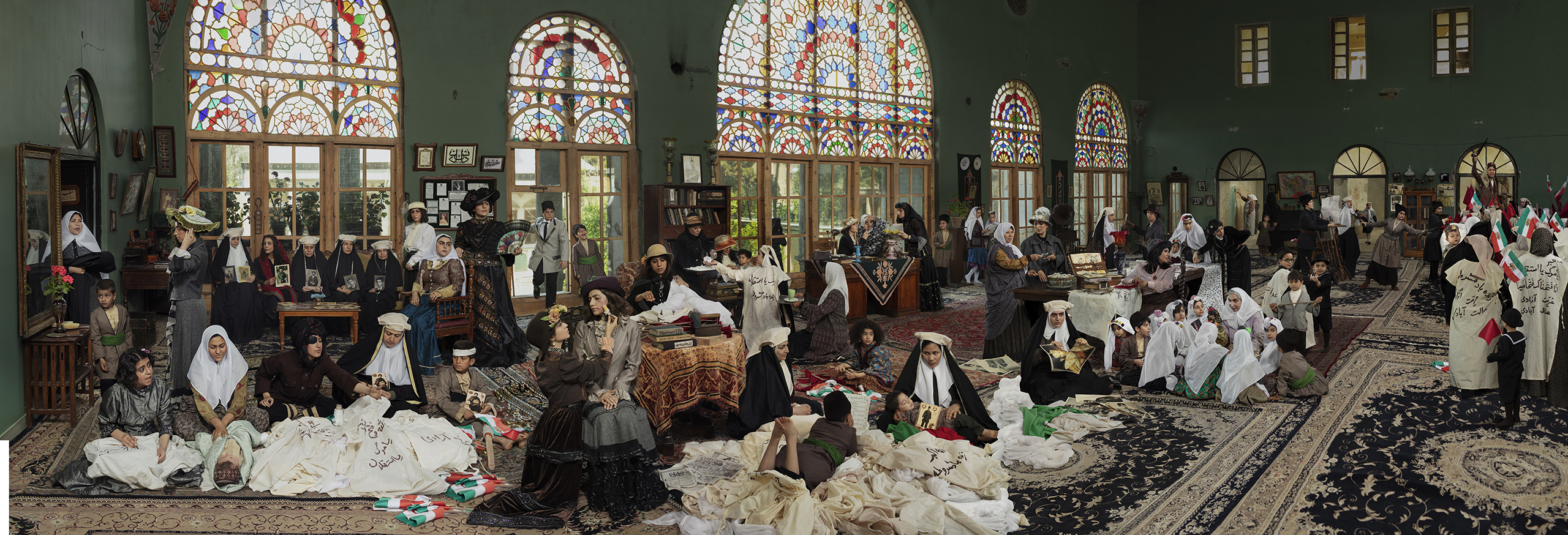
The First Iranian Women’s Movement
Dr. Kahhal’s Office, Tehran | December 1, 1911
2012–2026
Digital print on photo paper
23.6 × 69.3 in — Edition of 5
39.4 × 115.4 in — Edition of 3 + 1 AP
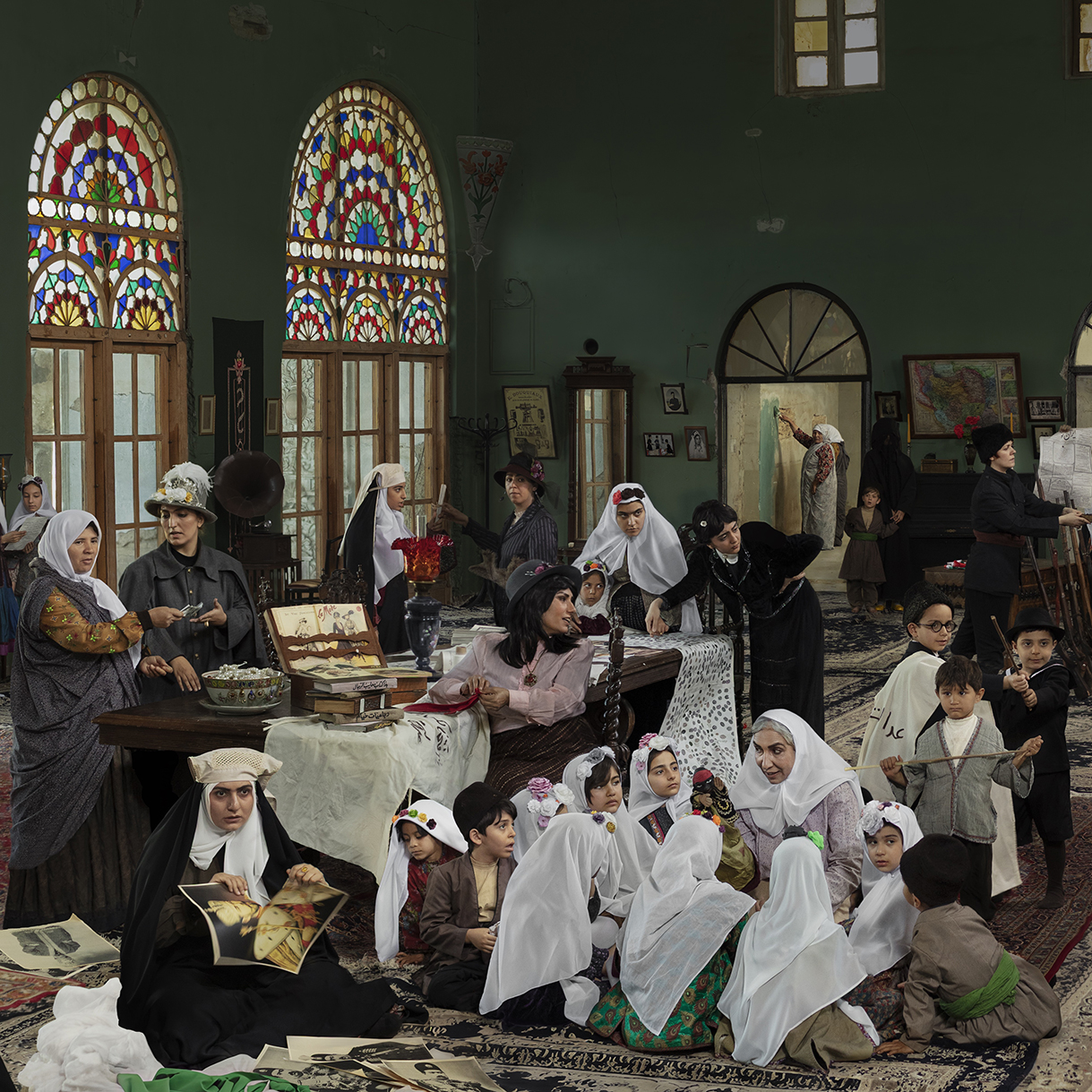
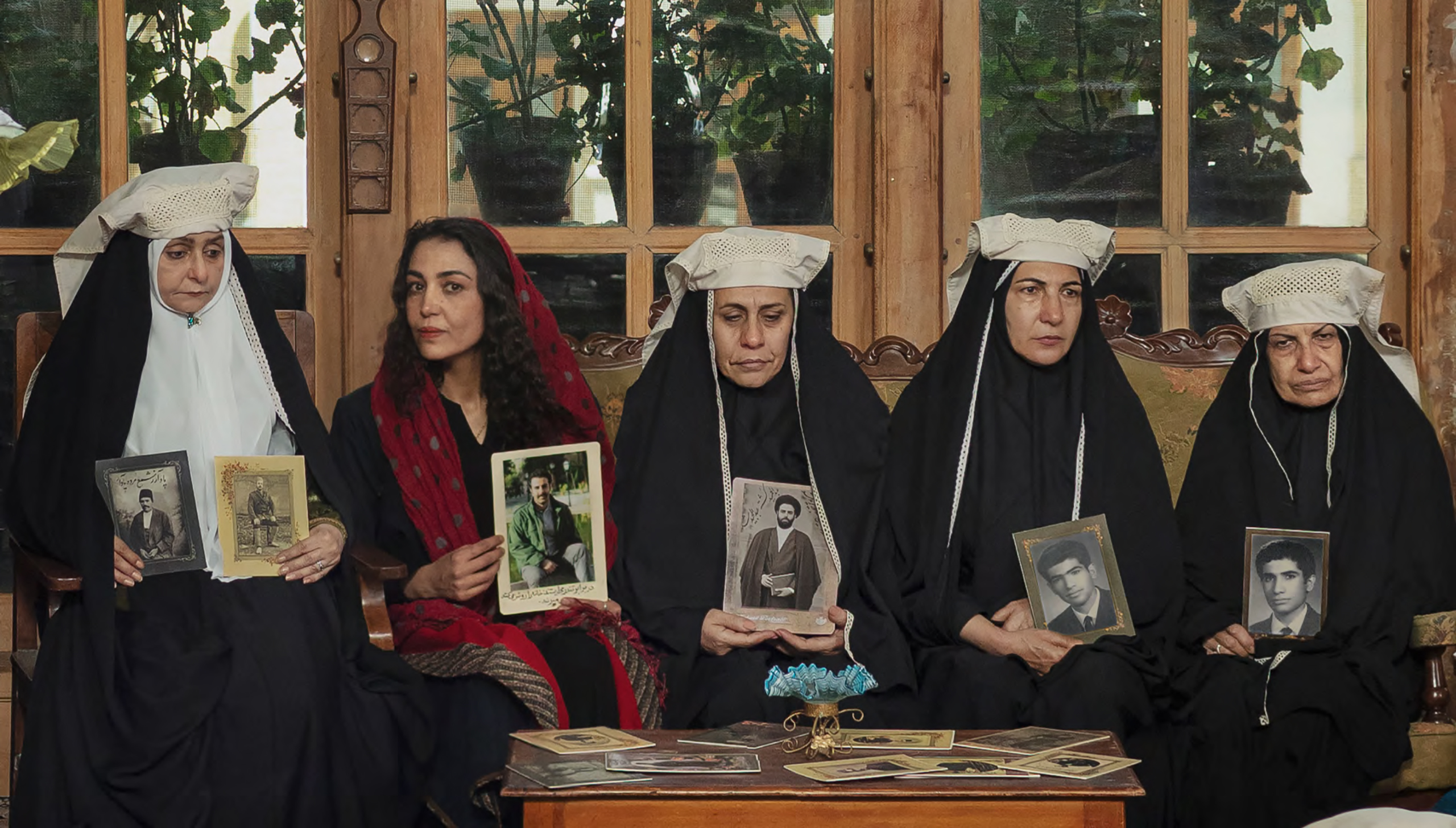
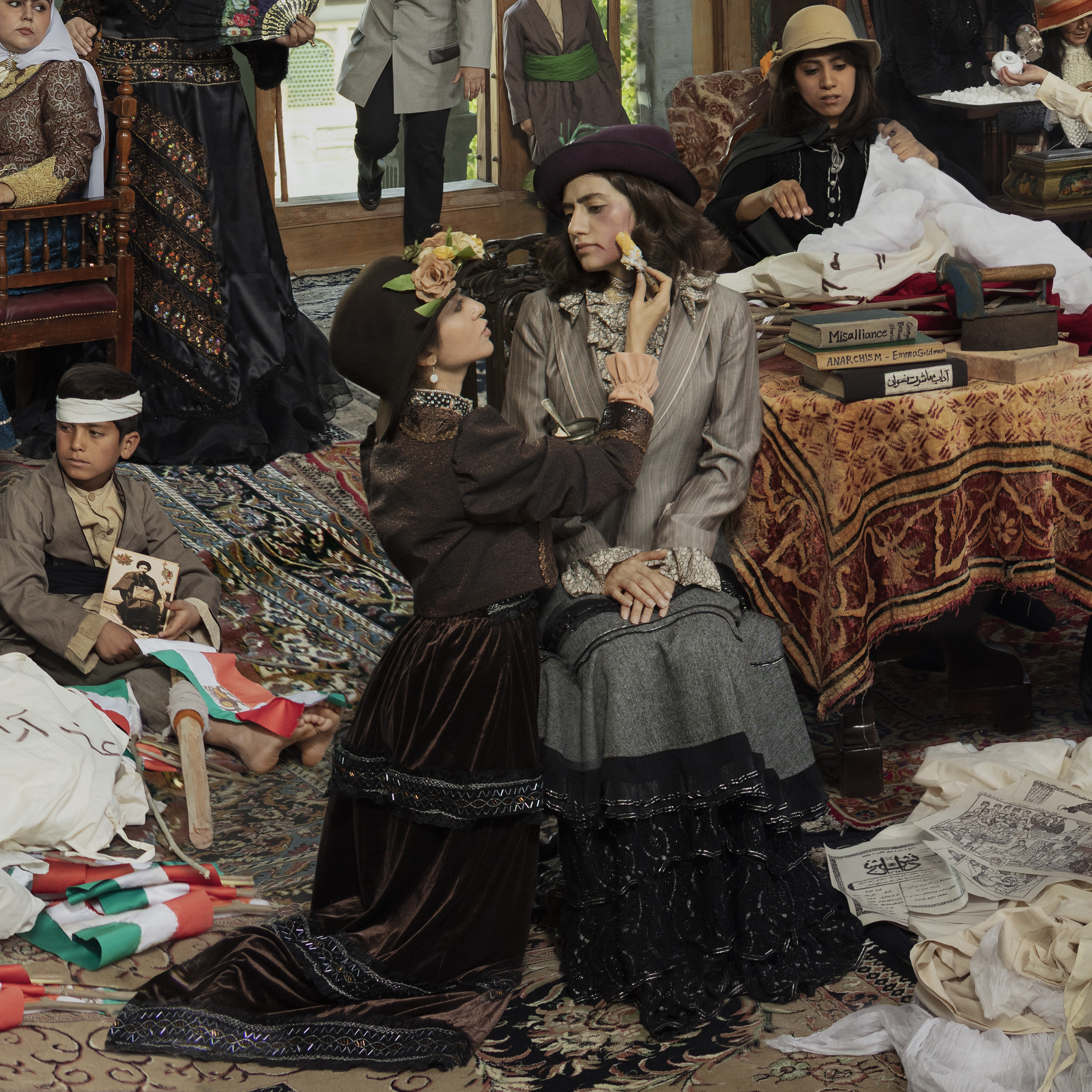
The First Iranian Women’s Movement (details)
After the Conquest of Tehran and the reopening of the Second Parliament, Iranian representatives—seeking to address the country’s severe financial crisis—invited the American financial adviser Morgan Shuster to Iran.
Russia, opposed to the presence of an independent American official, issued a forty-eight-hour ultimatum to the Iranian government on November 28, 1911, demanding Shuster’s immediate expulsion. The Iranian Parliament was forced to make its decision under extreme pressure.
Exhausted by years of foreign interference, the public reacted with anger. Crowds gathered outside the parliament, chanting “Death or Independence” and demanding resistance to the Russian ultimatum.
When news spread that parliament had capitulated, an unprecedented act of protest followed.
In his memoir The Strangling of Persia, Shuster wrote:
“When the news came that the representatives had accepted the Russian ultimatum, three hundred women in black veils and robes set out, many of them hiding pistols under their clothes or in their sleeves. They went straight to the Parliament … and declared that if the representatives doubted the honor of the Iranian nation, they would kill themselves, their husbands, and their children.”
Who were these women, and how were they able to organize such a large collective act of defiance?
Six years after the opening of Iran’s first National Consultative Assembly, women were still denied the right to vote. Yet as new political horizons opened, women founded schools, associations, and even newspapers, creating parallel structures of civic engagement outside formal power.
This photograph is an imagined reconstruction of the moment when these women prepared to march to parliament. The scene is set in the office of Danesh, the first newspaper published by a woman in Iran, edited by Dr. Kahhal—the country’s first female ophthalmologist and a pioneering journalist.
The demonstration was organized by members of the Ladies of the Homeland Society (Anjoman-e Mokhadarat-e Vatan), one of the earliest clandestine women’s equality groups in Iran. Founded in 1910, the association included women who established the first girls’ schools and female-run media.
They maintained connections with feminist organizations in New York, London, and Calcutta. Although Iranian women gained the right to vote in 1962, their struggle for equality—first articulated in moments such as this—continues to this day.
Inquire
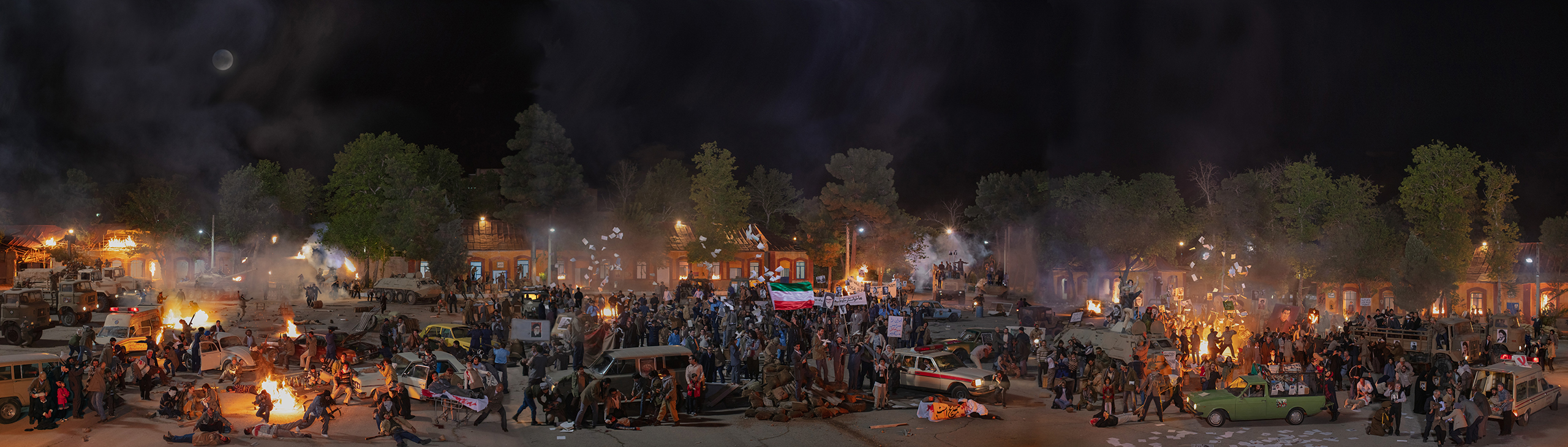
The Night of Revolution
Tehran | February 10, 1979
2012–2026
Digital print on photo paper
23.6 × 92.1 in — Edition of 5
39.4 × 153.9 in — Edition of 3 + 1 AP
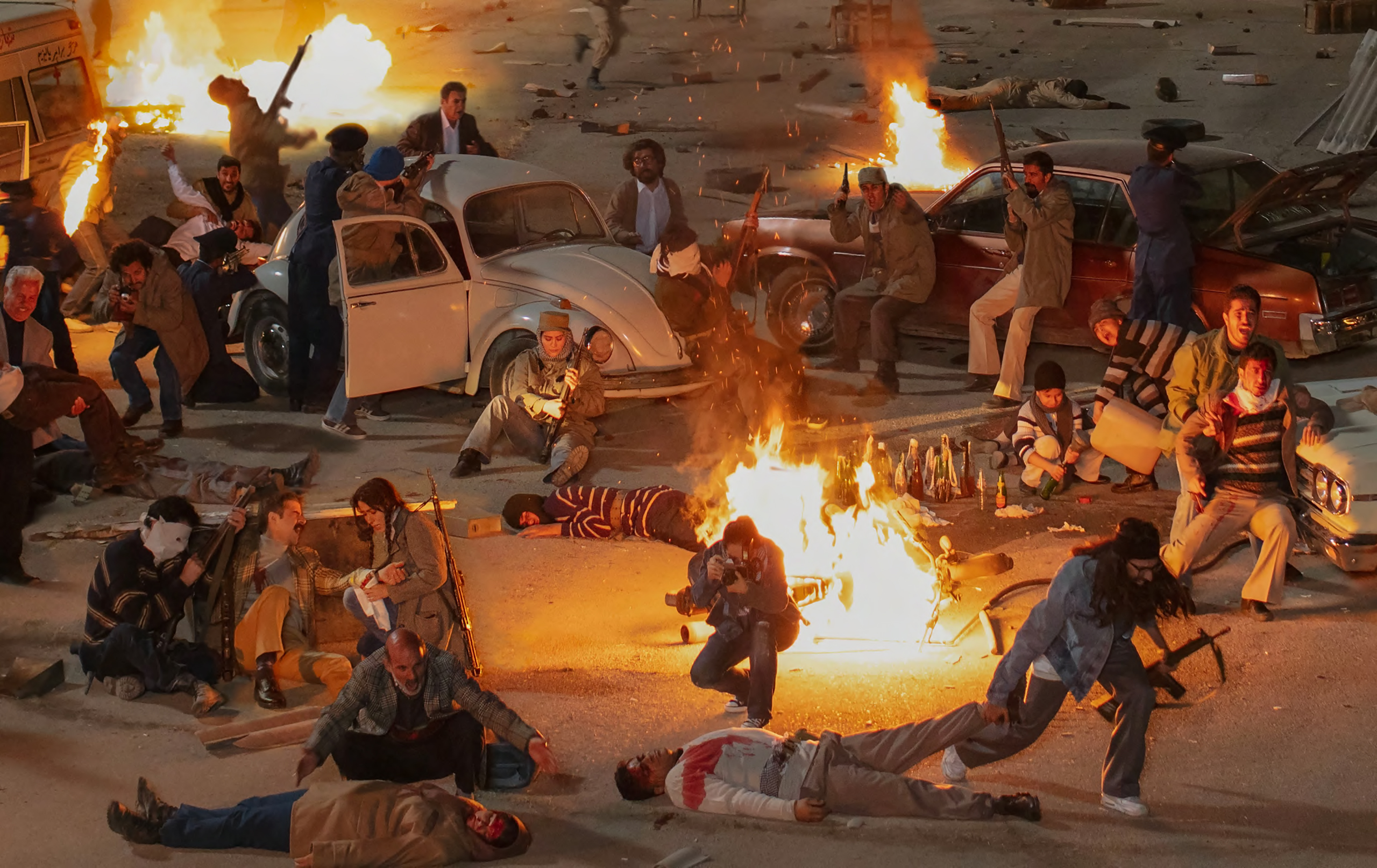
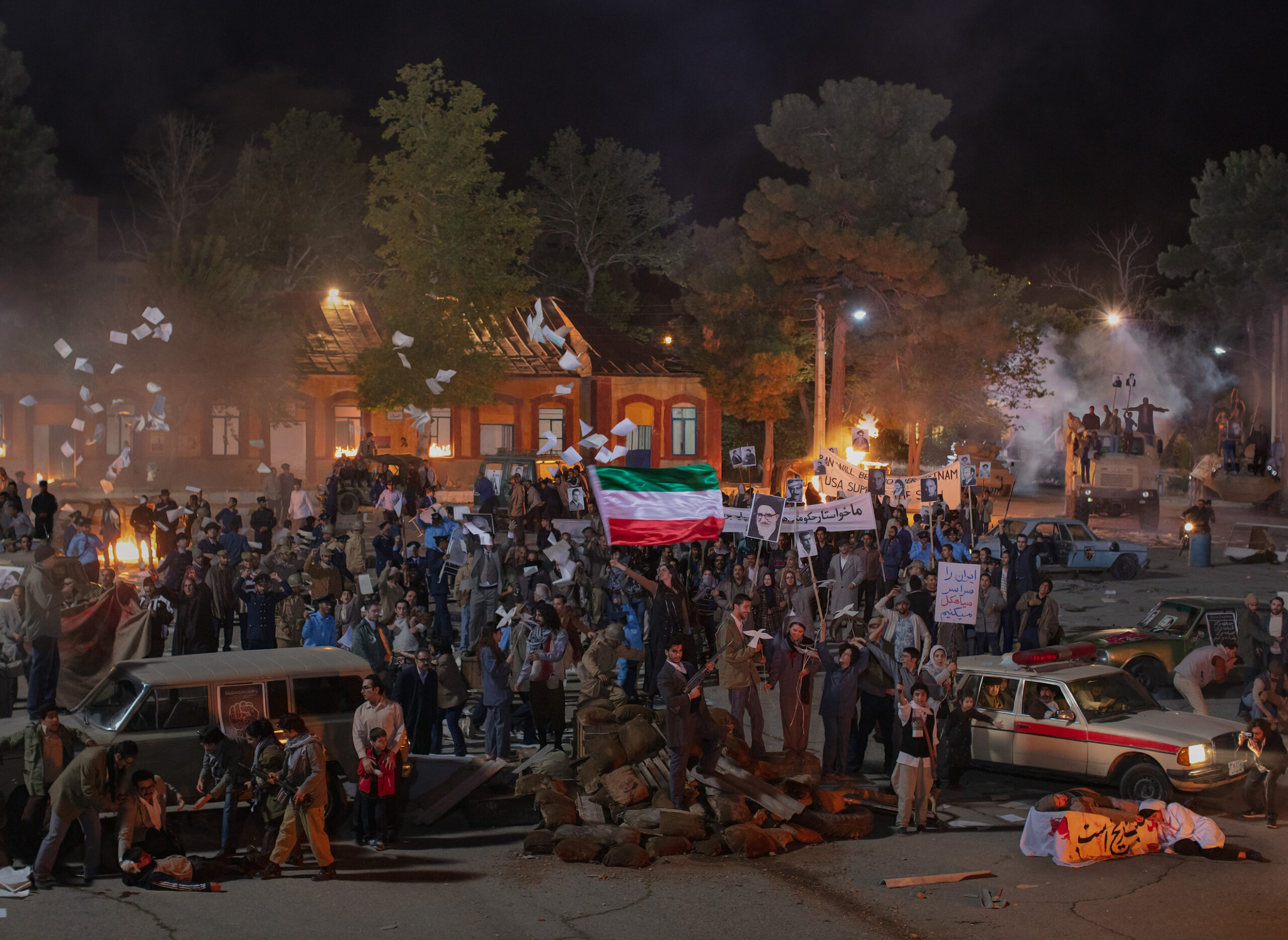
The Night of Revolution (detail)
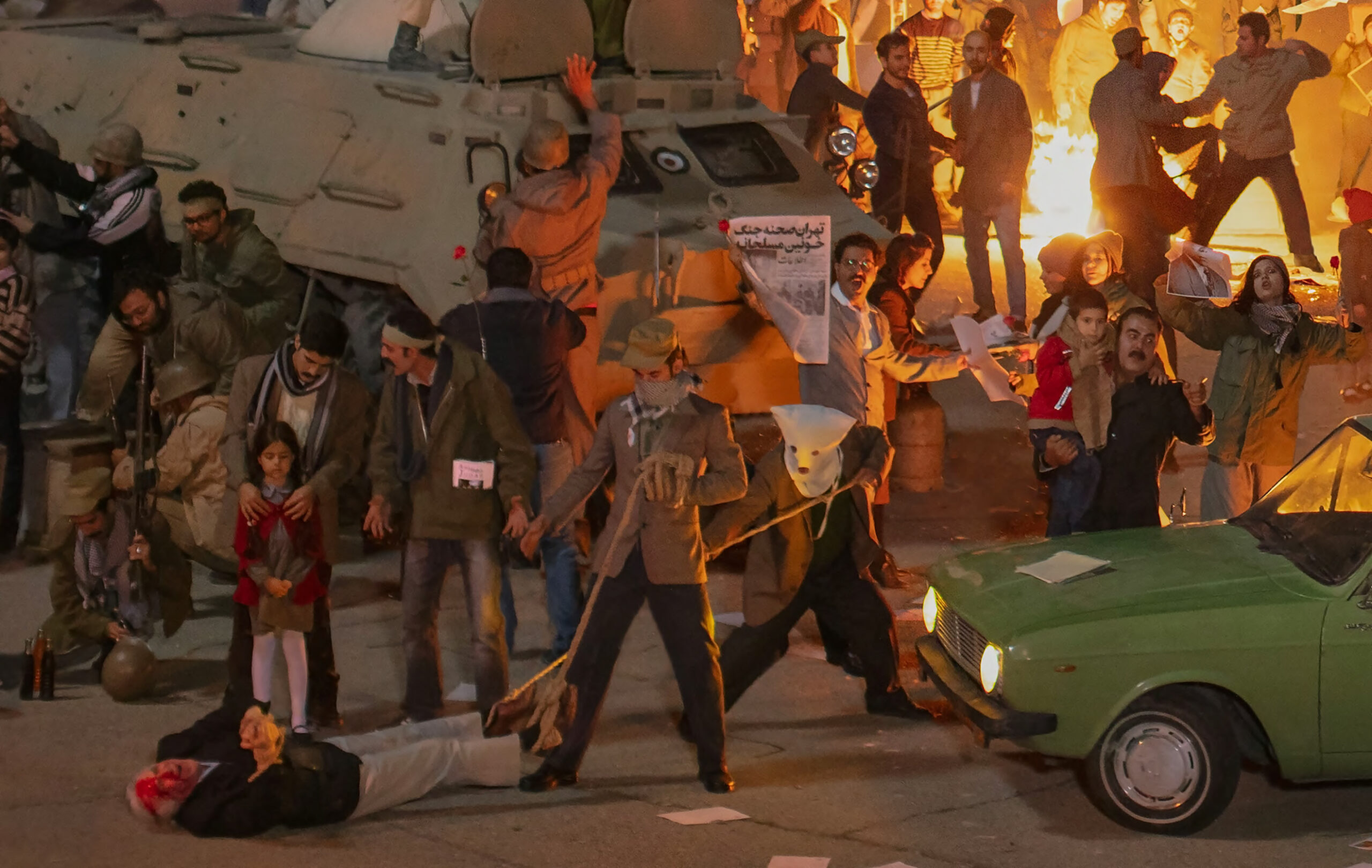
On the night of February 10, 1979, thousands of people in Tehran poured into the streets as the final confrontation with the Pahlavi regime unfolded. Armed groups stormed military barracks and police stations, disarming the Shah’s forces. Several senior officials had been detained in Tehran’s Military Police Barracks by royal order since October 1978. Although the Shah had left Iran on January 16, 1979, many former ministers and high-ranking officials remained imprisoned there.
That night, armed groups attacked the Military Police Barracks. While some—such as Dariush Homayoon, Minister of Information and Tourism—managed to escape amid the chaos, others were captured. Among them were Nematollah Nassiri, former head of SAVAK; General Nader Jahanbani, deputy commander of the Imperial Iranian Air Force; and Amir-Abbas Hoveyda, former prime minister. They were later executed in revolutionary trials. Amid the disorder, parts of the crowd looted the barracks, seizing weapons and government property.
The following day, February 11, the military declared neutrality and effectively surrendered to Ayatollah Khomeini, bringing the Pahlavi monarchy to an end. Rather than ushering in freedom, this moment marked the beginning of a far darker chapter in Iran’s history.
Many young revolutionaries who had taken up arms in the hope of political change soon became victims of the new regime themselves—executed or imprisoned by the emerging authorities. For many Iranians, this moment represents the point at which the revolution was gradually seized by religious power.
The revolution did not conclude Iran’s struggle for democracy; instead, it inaugurated a more complex and enduring phase—one whose consequences continue to shape Iranian society to this day.
Inquire
ADVOCARTSY is a contemporary art platform specializing in Iranian contemporary art.